Halal Guide
Is Buldak Halal? The Two-Version Trap Explained
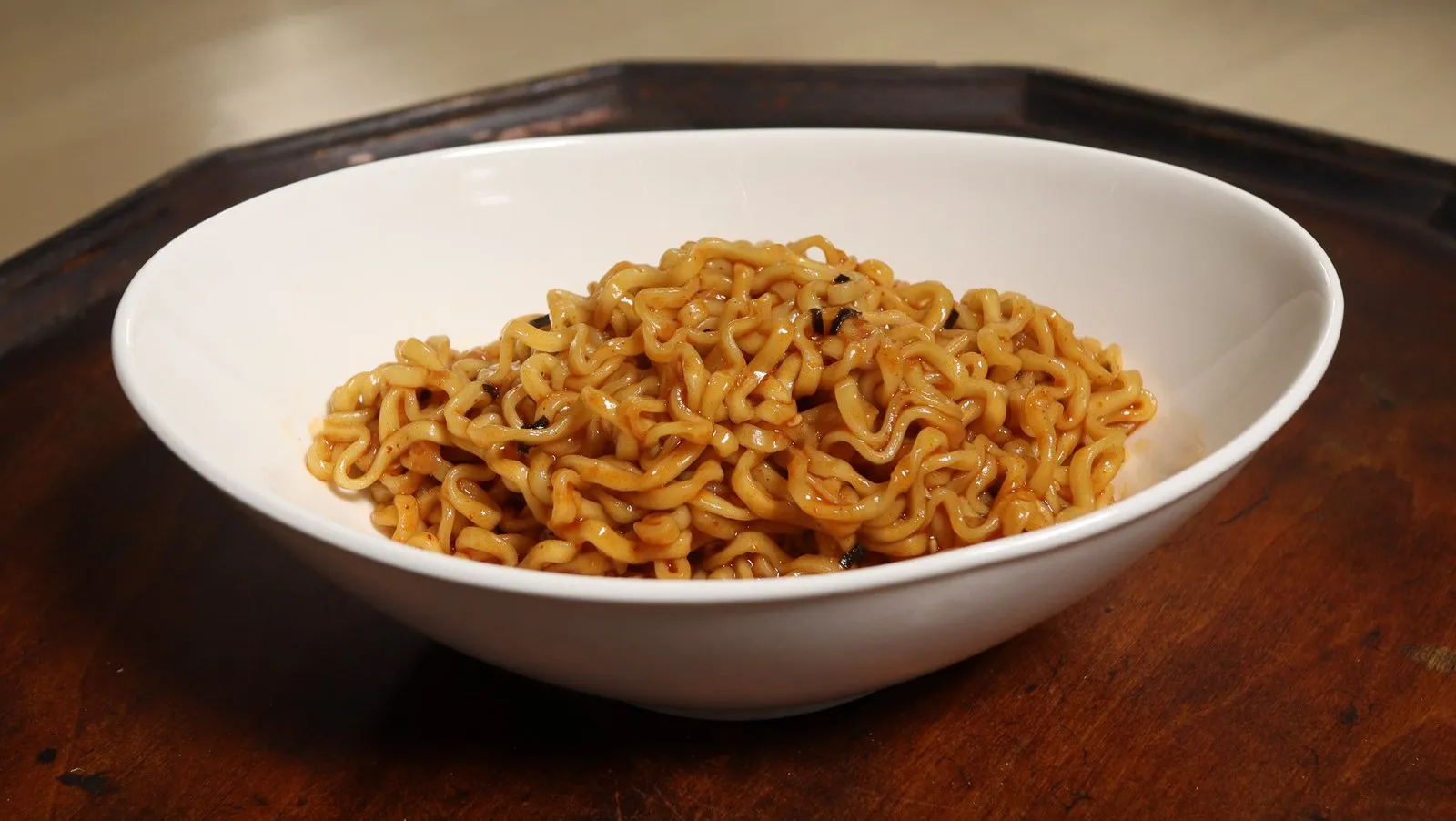
Photo: Mobius6 / Wikimedia Commons (CC BY-SA 4.0)
Buldak (불닭볶음면) — Samyang’s “fire chicken” stir-fried noodles — went global on the back of the Fire Noodle Challenge. For Muslim fans, “is buldak halal?” has a more careful answer than a simple yes or no, because Samyang makes two parallel versions of the product under nearly identical packaging. Understanding that one fact answers most of the question.
ℹ️ This is a recipe suggestion, not halal certification — verify products via the official logo (BPJPH for Indonesia / JAKIM for Malaysia / MUI) on the packaging.
The two-version trap
Samyang produces a domestic (Korean home-market) version and a separate export halal version, on different production lines. The packaging looks almost the same, which is exactly where confusion starts.
- The export halal version is reformulated to be alcohol-free and carries a physical halal logo (KMF, MUI, or JAKIM) on the front.
- The domestic version carries no halal logo.
Here is the part that is widely misreported, so let us be precise: the domestic version is best described as mushbooh — doubtful — not “contains pork.” Its public ingredient list uses artificial chicken flavour; it does not declare pork. The genuine concerns are (a) flavoring and enzyme sources that simply are not disclosed, and (b) possible residual ethanol from a traditionally fermented soy sauce. So the message is not “buldak has pork.” The message is: without a halal logo, do not assume — verify the logo.
What is actually doubtful in an uncertified pack
- Meat or flavor extract. A domestic pack may use non-zabiha chicken extract or an undisclosed flavoring. The source is not certified, so it cannot be confirmed either way.
- Residual alcohol. Traditionally fermented soy sauce can leave trace ethanol. The export halal line is specifically reformulated to be alcohol-free.
- Cheese variants and “Carbo.” Cheese versions raise an enzyme (rennet) question. Worth getting right: traditional rennet comes almost entirely from calf — a “pork rennet” essentially does not exist. The practical fix is to choose cheese made with microbial (vegetarian) rennet. Note too that Carbo buldak, despite the name, is built on an Alfredo-style base with several cheeses.
The 2017 BPOM recall — what it really was
In 2017 Indonesia’s food authority BPOM recalled four Korean instant noodles after pork-DNA fragments were found — including Samyang U-Dong and a kimchi-flavor product. This story is often retold incorrectly, so two things matter:
- Those four products were non-certified parallel imports, brought in separately from the MUI-certified Samyang line.
- The lesson is therefore not “Samyang buldak contains pork.” The lesson is that the same brand can have both certified and uncertified parallel lines, and only the halal logo tells you which one you are holding.
The certified export line
In 2017 Samyang became the first Korean instant-noodle maker to earn Indonesia’s MUI halal certification. The certification covered three flavors: Buldak (original), Cheese Buldak, and Cool Buldak — a milder version. (It is Cool buldak, not a “honey” buldak, which is a different product not on that list.) The export halal line is produced on dedicated alcohol-free lines, also holds KMF certification, and some export packs additionally carry Malaysia’s JAKIM mark. If you buy in Indonesia, Malaysia, or the UAE, you are likely getting the certified version — but the rule never changes: confirm the logo on the actual pack.
Make a halal-friendly buldak at home
If a pack is uncertified and you would rather not guess, use the dried noodles and build your own sauce — or recreate the whole thing with halal ingredients:
- Stock: halal chicken stock or vegetable stock instead of an unverified seasoning powder.
- Sauce base: gochujang with a little doenjang (soybean paste); chili flakes for heat; honey in place of corn syrup.
- Protein: zabiha chicken thigh or breast, with a soft-boiled egg on top.
- Cheese / Carbo style: toss the noodles in the sauce, add microbial-rennet mozzarella, cover for a minute to melt.
A safety note on the Fire Noodle Challenge
Buldak’s fame rides on the spicy-noodle challenge, but the most extreme variants come with health cautions worth taking seriously. In June 2024 Denmark recalled three Samyang products over their capsaicin levels. In August 2024 that recall was partially lifted after independent analysis: 2x Spicy and Hot Chicken Stew returned to shelves, while 3x Spicy remained flagged. Children and anyone with relevant health conditions should be especially careful.
Frequently asked questions
Does buldak contain pork? The domestic version’s ingredient list does not declare pork. It is better described as doubtful (mushbooh) because of undisclosed flavoring and enzyme sources and possible residual alcohol — not confirmed pork. Without a halal logo, treat it as unverified rather than assuming the worst or the best.
Is all buldak halal, then? No. Only the export version carrying a physical halal logo (KMF / MUI / JAKIM) is certified. A same-looking domestic pack is not.
Which flavors are MUI-certified? The 2017 certification covered Buldak, Cheese Buldak, and Cool Buldak. Always check the logo on the specific pack you buy.
What about the 2017 pork-DNA news? That involved non-certified parallel-import noodles (such as Samyang U-Dong and a kimchi flavor), which were separate from the MUI-certified Samyang line.