Halal Guide
Is Gimbap Halal? The Ham, Crab Stick and Mirin Checklist
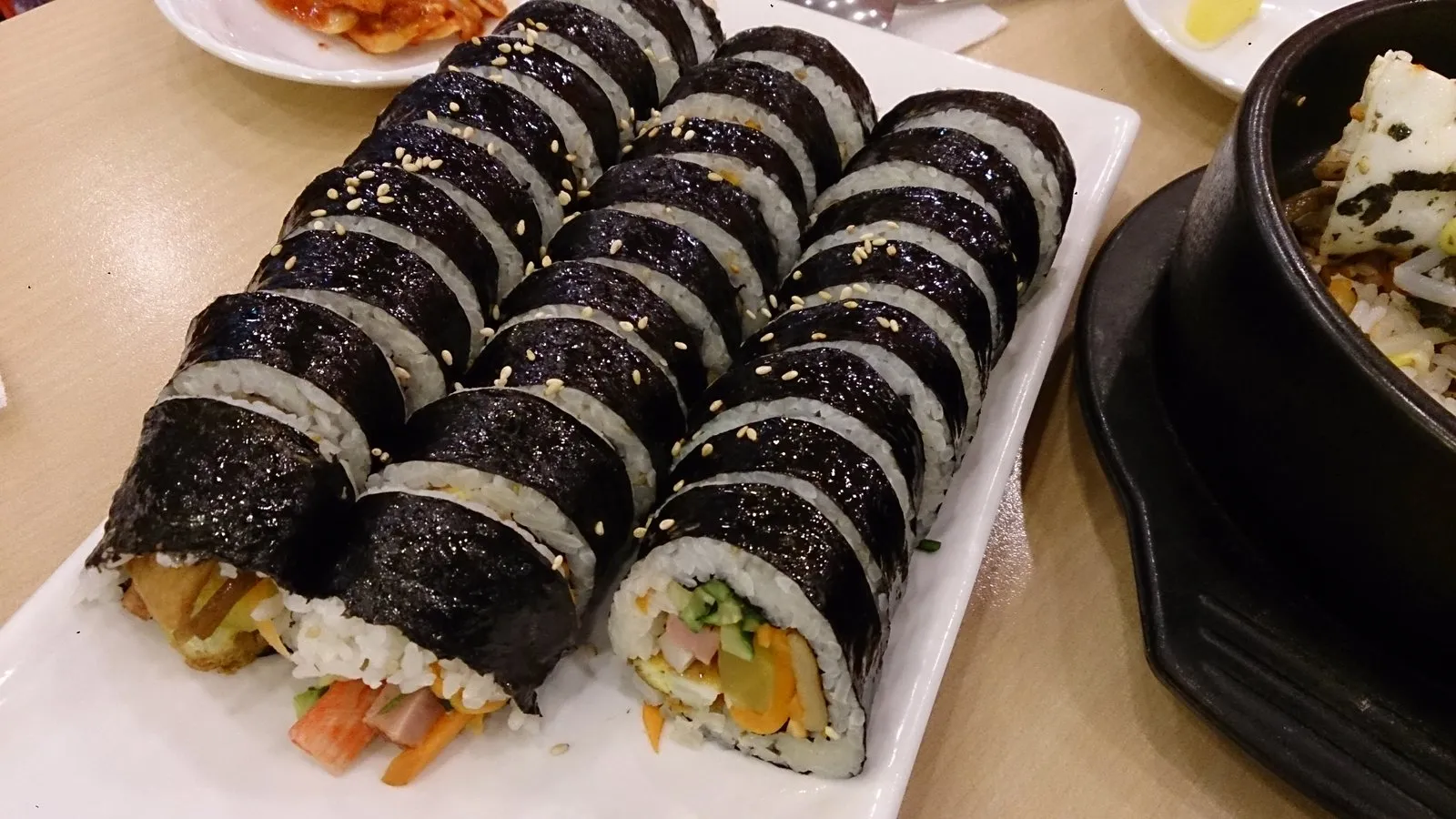
Photo: ProjectManhattan / Wikimedia Commons (CC0)
Gimbap (김밥) — rice and vegetables rolled in gim (roasted seaweed) and sliced into bite-size pieces — is one of the easiest Korean foods to recommend to a Muslim reader. It is largely vegetable-based, simple, and naturally close to halal. But “close to halal” is not the same as “always halal,” and the most common fillings are exactly where the question hides. If you know the three traps — ham, imitation crab stick, and mirin — gimbap becomes a genuinely safe, everyday choice.
ℹ️ This is a recipe suggestion, not halal certification — verify products via the official logo (BPJPH for Indonesia / JAKIM for Malaysia / MUI) on the packaging.
Why gimbap is one of the safer choices
The base of gimbap is reassuringly plain: rice seasoned with sesame oil and salt, a sheet of roasted seaweed, and whatever fillings you like. The fillings are genuinely interchangeable — recipe blogs say that if you can roll it into a cylinder, you can put it in — and that flexibility is exactly what makes a halal version so easy. Swap two or three ingredients and you are done.
The two fillings worth a second look
Ham and spam
This is the classic trap. Standard Korean ham, spam, sausage, and bacon are pork-based, so a plain gimbap from a regular shop can easily be non-halal even though it looks like a vegetable roll. The well-worn advice for Muslim travellers is simple: ask for the ham to be left out, or order vegetable gimbap (yachae gimbap) from the start.
Imitation crab stick (matsal)
Crab stick is made from surimi, a paste of white fish such as pollock — and fish itself is generally considered halal. The catch is the binders and additives wrapped around it: a crab stick can contain gelatin (possibly pork-derived), blood-plasma protein, or alcohol-based flavourings. Halal surimi specifically requires that any binding gelatin come from a bovine or fish source. So the fish is fine; it is the glue that needs a brand-by-brand check.
Hidden traps you cannot see
Even a roll that looks purely vegetable can hide a few things worth knowing about — and these are the points most English-language guides skip:
- Mirin (cooking rice wine). Mirin runs around 14% alcohol and is classed as khamr (an intoxicant), making the ingredient itself haram. In Korea it is sometimes used to season fillings — for example to take the smell off fish — so it can be present even when you do not see it.
- Cooking wine or soju in cooked fillings such as bulgogi, braised meats, or stir-fries.
- Gelatin and binders in crab stick and fish cake, as above.
- Fish-sauce-based kimchi if you order a kimchi gimbap — anchovy sauce or salted shrimp makes that kimchi a separate question, so a vegan (fish-sauce-free) kimchi is the safer pick.
- Cross-contamination. Even halal ingredients are not considered halal if they are prepared on equipment that has handled pork — preventing that mixing is a core requirement of certification itself.
The three easy halal swaps
You do not need a special recipe — just redirect the fillings:
- Halal meat instead of ham. Use a halal-certified beef, chicken, turkey, or duck sausage; smoked beef is a popular, easy substitute. (Korea even produces Muslim-friendly sausage and ham made from a beef-chicken-duck-turkey blend instead of pork.)
- Tuna instead of crab stick. Canned tuna — drained and mixed with mayo — is fish, widely treated as halal, and the basis of the much-loved tuna gimbap (chamchi gimbap).
- Go vegetable-and-egg-forward. The safest route of all is yachae gimbap: carrot, cucumber, spinach, and pickled radish (danmuji) with strips of egg. It is the standard recipe in Muslim meal-prep lunchboxes.
Make a halal gimbap at home
A simple, verifiable build:
- Season the rice: per cup of cooked rice, about ½ Tbsp sesame oil and ¼ tsp fine salt, to taste.
- Pre-cook the fillings: make a thin egg omelette and cut into strips; lightly sauté carrot (and any halal meat) for about a minute each.
- For a tuna roll: press the canned tuna in a sieve to drain well, then mix with a little celery, mayo, Dijon mustard, and lemon juice.
- Roll: spread rice over about two-thirds of the seaweed sheet (rough side up), leaving roughly 5 cm clear at the top; lay the fillings, then wet the bare edge to seal. Brush the roll with a touch of sesame oil and slice.
A note for fans of spam gimbap: it is delicious but built on pork luncheon meat, so it only works as a halal dish if you replace it with halal beef luncheon meat.
Verify before you buy
If you are buying ready-made or frozen gimbap, certified options are growing fast across the region:
- Smile Kimbap (Indonesia) is a Korean-style gimbap brand that carries a halal certificate number (ID36210022092430525).
- A vegan mushroom-japchae gimbap made in Korea carries KMF halal certification — going vegan neatly sidesteps the meat-and-seafood traps altogether.
- CJ bibigo has been expanding its halal lineup and launched JAKIM-halal Korean mandu and hoppang in Malaysia, a sign of how much certified frozen K-food is reaching the region.
The reliable rule stays the same. In Indonesia the official halal certificate is issued by BPJPH (the government’s Halal Product Assurance Agency) since the 2022 label transition, while MUI now issues only the religious fatwa on halal status — so look for the purple BPJPH “Halal Indonesia” logo (or the JAKIM mark in Malaysia) on the actual package rather than assuming.
Frequently asked questions
Is plain gimbap from a Korean shop halal? Often not, because the default roll usually contains pork-based ham and an imitation crab stick of uncertain binders. Order vegetable or tuna gimbap, or ask for the ham to be removed.
Is the crab stick in gimbap halal? The fish surimi is generally fine, but the binders can include pork gelatin, blood plasma, or alcohol-based flavouring. Use a halal-certified surimi, or swap in tuna.
What is the safest halal gimbap? Vegetable gimbap (yachae gimbap) — carrot, cucumber, spinach, pickled radish, and egg. It removes the meat and seafood questions entirely and is ideal for meal prep.
Is mirin really a problem if it is just for seasoning? Yes. Mirin is about 14% alcohol and counts as khamr, so the ingredient itself is haram regardless of how small the amount — replace it with a non-alcoholic alternative such as juice plus a little vinegar.