Halal Guide
Is Gochujang Halal? The Fermentation Myth, Corrected
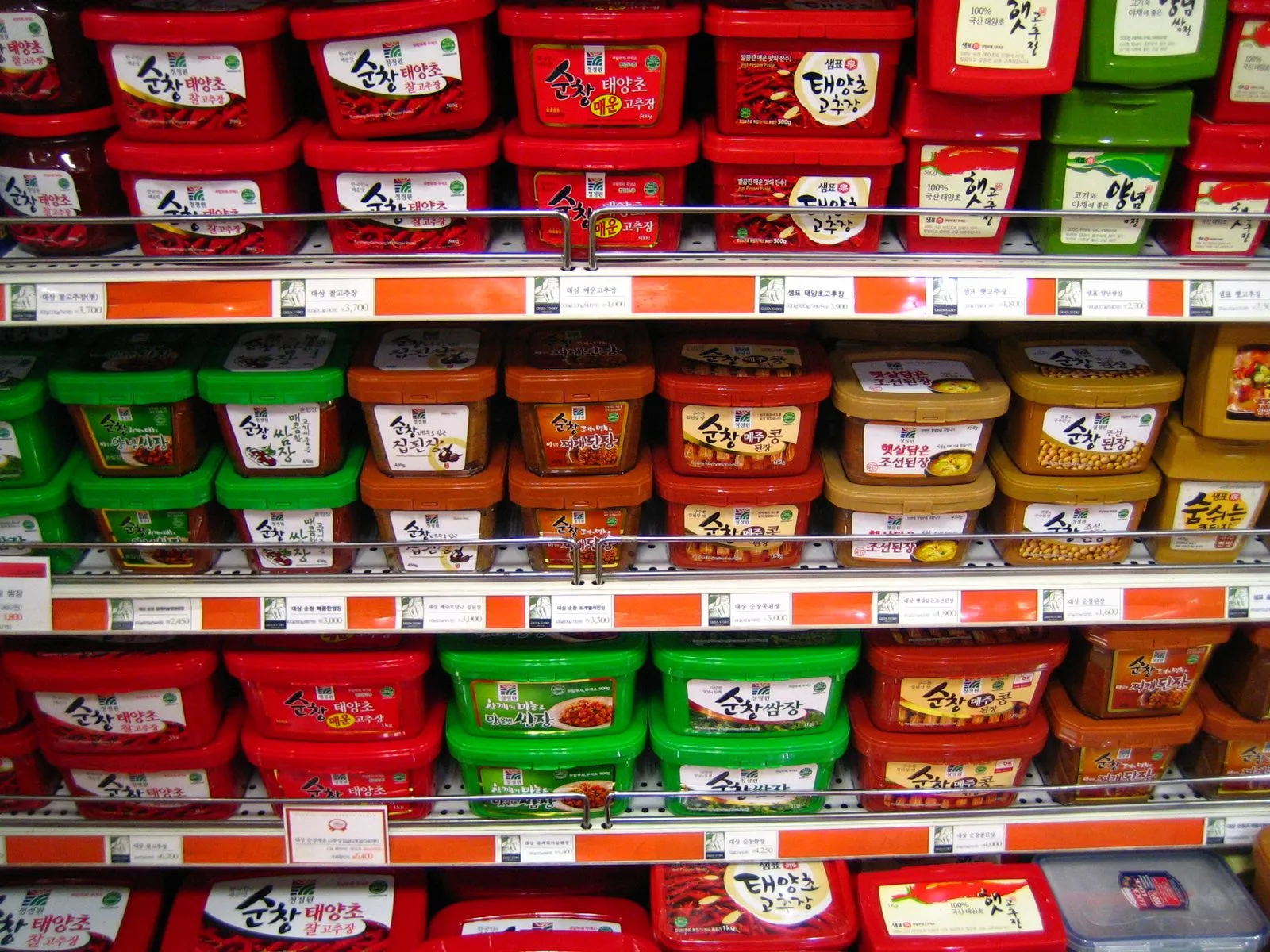
Photo: ayustety / Wikimedia Commons (CC BY-SA 2.0)
Gochujang (고추장) — Korea’s deep-red fermented chili paste — is the backbone of tteokbokki, bibimbap, dak-galbi and almost everything people mean when they say “Korean spicy.” It is also the single K-food ingredient that worries Muslim shoppers the most, usually in one sentence: gochujang is fermented, fermentation makes alcohol, so it must be haram. That chain of reasoning is mostly a misunderstanding — and untangling it is the whole point of this guide.
ℹ️ This is a reference guide, not halal certification — always verify a product through the official logo (BPJPH for Indonesia / JAKIM for Malaysia / KMF or MUI) on the packaging itself.
The myth, and why it does not hold up
Let us take the worry apart, piece by piece.
The ingredients are halal to begin with. Traditional gochujang is chili powder, glutinous (or short-grain) rice, fermented soybean (meju), barley malt, and salt. There is no pork and no animal product in the base recipe, so as a list of ingredients it is naturally halal.
Trace fermentation alcohol is generally not the problem. Yes, fermentation produces a small amount of ethanol. But that trace is normally far too little to intoxicate, and across several schools of Islamic law — and in Indonesia’s own guidance — a tiny, naturally occurring by-product like this is not what turns a food haram. The fiqh discussion only becomes serious when alcohol reaches a significant amount.
Khamr is about intent, not chemistry. An LPPOM MUI auditor put the principle plainly: what matters is the purpose of the fermentation. If something is fermented in order to make an intoxicating drink, it is khamr; if it is not, then it is not khamr — even when a little ethanol exists as a by-product. By that logic, fermented foods like tapai, gochujang and tteokbokki are not classified as khamr, because nobody ferments them in order to get drunk.
So here is the headline correction: the real question about gochujang is not “was it fermented?” but “where did the alcohol in the final product come from, and how much of it is there?”
The part that actually deserves attention: added ethanol
Here is the nuance the “fermentation = haram” myth completely misses — and the reason we still say check the label rather than relax, it is all fine.
Separate from the trace alcohol that fermentation creates, some Korean paste makers deliberately add ethanol (jujeong, 주정) at the packaging stage. A dose of roughly 2% improves the aroma and, more practically, stops the tubs from bubbling and boiling over in summer heat and suppresses the white surface mold that paste can grow. It is, in other words, a preservative step — not fermentation.
How much does that change things? A halal-screening lab study that measured commercial gochujang by gas chromatography found ethanol in essentially every sample, and reported that about 57% of the products tested exceeded 1% total alcohol, with six samples above 3%. The researchers attributed the higher readings partly to this added packaging ethanol, not to fermentation alone.
The takeaway is balanced, not alarming: a plain, certified gochujang is a halal-friendly pantry staple, while an uncertified tub is simply uncertain — not because it was fermented, but because you cannot see whether preservative ethanol was added, or how much.
What Indonesia’s rules actually say
For readers in Indonesia, the reference point is MUI Fatwa No. 10/2018, which treats food and drink differently:
- For a beverage, the final product must contain less than 0.5% ethanol.
- For a food final product, there is no fixed ethanol ceiling — provided the ethanol is (1) medically harmless, (2) not derived from khamr, and (3) not contaminated by anything haram or unclean.
- Ethanol that comes from the khamr (liquor) industry is forbidden regardless of the amount.
Gochujang sits in the food category, so fermentation- or preservative-ethanol does not automatically make it haram — the conditions above, plus certification, are what matter. LPPOM MUI has even used instant tteokbokki and Korean chili paste as worked examples of non-khamr fermented foods that can be produced halal.
One mark, two authorities — the BPJPH change
A practical update that trips people up: since 1 March 2022, Indonesia’s official halal mark is issued by BPJPH (the government’s Halal Product Assurance Agency), not by MUI. Today BPJPH issues the certificate and the logo, while MUI issues the religious fatwa behind it. The old MUI logo is still valid during a transition period (through 17 October 2026), but on anything you buy in Indonesia now, the mark to look for is the BPJPH logo.
“It is a famous brand, so it is fine” — the dual-line trap
This is where many shoppers slip. A single Korean brand often runs two separate product lines: an export halal line, and a domestic line that was never certified.
- Daesang’s export brand, O’Food / Chung Jung One, sells a gochujang marketed with KMF (Korea Muslim Federation) halal certification for Muslim-majority markets.
- The very same company’s domestic “Sunchang” gochujang is a different, uncertified product. One halal-screening database in fact lists a Sunchang (mild) gochujang as carrying no halal certification information.
So “it is Daesang / Chung Jung One, it must be halal” is exactly the wrong inference. Certification attaches to the specific product, not to the brand.
Certified options that already exist
You do not have to cook your own. Several gochujang products are sold with certification — verify the logo on the exact jar, but these are reasonable starting points:
- O’Food / Chung Jung One Gochujang (Halal), 300 g — marketed with KMF halal certification and distributed in Malaysia, the UAE and other Muslim markets.
- Sajo Gochujang (Hot Pepper Paste) — sold as KMF halal-certified (and vegan).
- Sempio Vegan Gochujang — sold as halal-certified (and vegan).
We are pointing to what the sellers state, not vouching for any product ourselves — the logo on the package you actually hold is the only thing that settles it.
How to read a gochujang label
A quick checklist for the shelf — and the photo above is exactly the situation you will face: a wall of near-identical red tubs.
- Find the official logo first. BPJPH in Indonesia, JAKIM in Malaysia, KMF on Korean export jars. If a jar only prints the word “halal” with no official logo, treat it as unverified.
- Scan the ingredient list for added-alcohol signal words: Korean 주정 (jujeong), 발효주정, 에탄올; English ethanol, alcohol, ethyl alcohol. These usually point to deliberately added alcohol rather than a fermentation trace.
- Look for “alcohol-free.” KMF export pastes are often reformulated to be alcohol-free — the same pattern used for certified export ramen.
- When in doubt, ask the maker — and, for a personal ruling, the scholar or certifying body you follow. Schools differ, and this guide is a starting point, not a verdict.
A few smaller traps
- Sauced and “all-purpose” gochujang (rosé, stir-fry, manneung seasoning pastes) can blend in cooking wine (mirim) or rice wine (cheongju) on top of the base — riskier than plain gochujang. Rosé styles may also add dairy or bacon.
- Mixed seasoning pastes built on gochujang — ssamjang, dipping dadaegi — can carry fish sauce or animal extract, so the word “gochujang” on the label is not a safety guarantee by itself.
- Brand is not SKU. As the Sunchang example shows, the same maker’s domestic and export jars can differ completely. The individual logo is the only reliable test.
Frequently asked questions
Is gochujang haram because it is fermented? No — that is the most common misunderstanding. The ingredients are plant-based, and the trace ethanol from fermentation is generally not what makes a food haram. The genuine variable is added preservative ethanol in some products, which is exactly why a certified jar removes the doubt.
So is gochujang halal or not? The base is halal-friendly; the status of a specific tub depends on whether ethanol was added and whether it carries certification. A KMF / BPJPH / JAKIM-certified gochujang is the simplest safe choice.
What should I look for on the label? An official halal logo first; then the ingredient list for 주정 / ethanol / alcohol; and ideally an “alcohol-free” note. No official logo means unverified — not necessarily haram.
Are Chung Jung One and Sunchang the same thing? They come from the same company (Daesang), but the export O’Food / Chung Jung One halal line and the domestic Sunchang line are different products. Check the certification on the one in your hand.