Halal Guide
Is Korean Corn Dog Halal? The Four-Point Check Beyond the Sausage
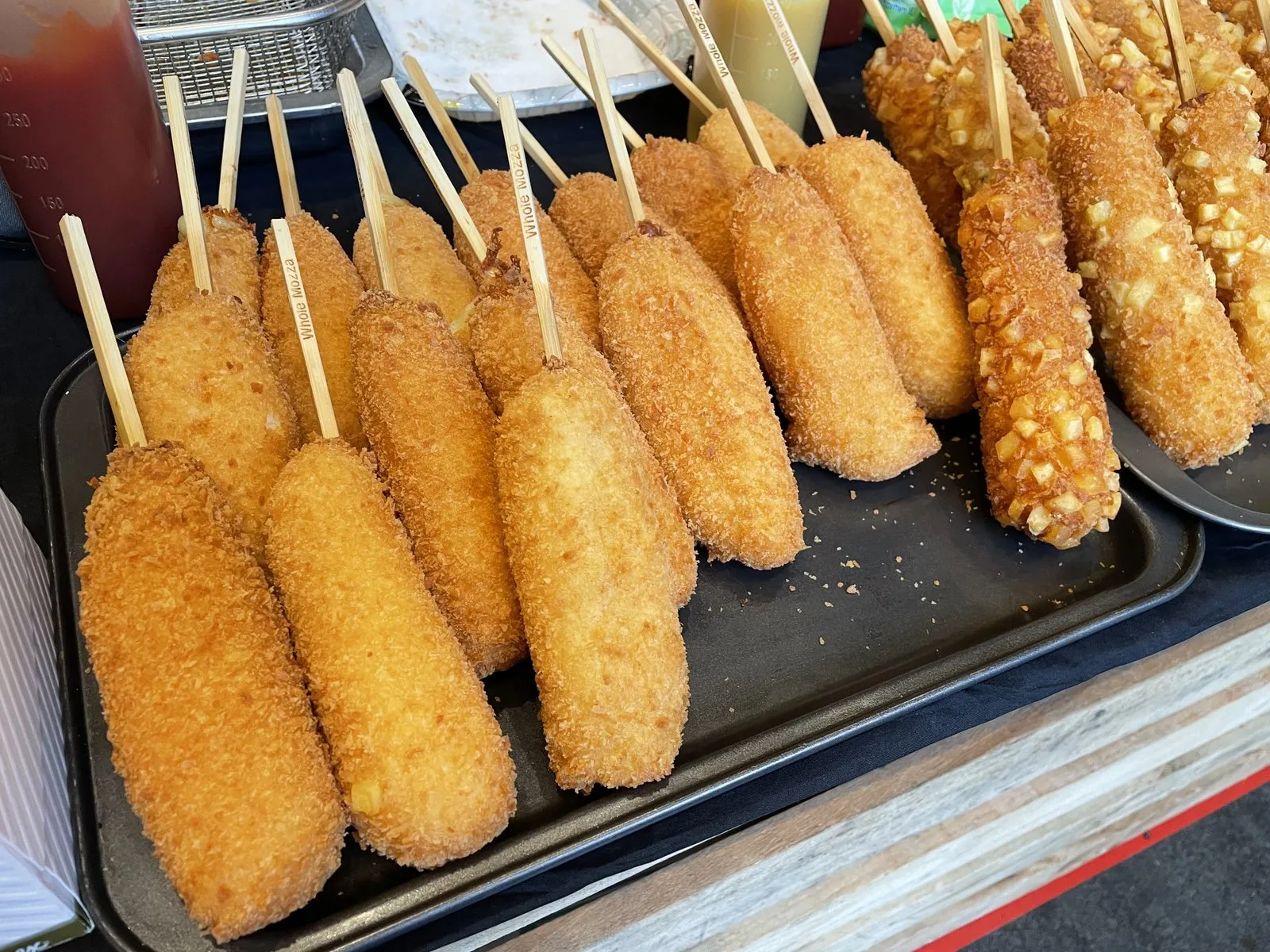
Photo: Aerous / Wikimedia Commons (CC BY-SA 4.0)
The Korean corn dog (콘도그) — a sausage or cheese stick dipped in yeasted batter, rolled in panko, deep-fried, and dusted with sugar — became one of the biggest K-street-food breakouts on social media, and it is everywhere across Indonesian and Malaysian malls. For a Muslim reader the obvious question is: is Korean corn dog halal? The honest answer is that you cannot settle it by looking at the sausage alone. Unlike many K-foods, the corn dog hides potential issues in four different places — the oil, the casing, the batter, and the sauce — so it pays to know exactly what to check.
ℹ️ This is a recipe suggestion, not halal certification — verify products via the official logo (BPJPH for Indonesia / JAKIM for Malaysia / MUI) on the packaging.
“Chicken sausage” is not the finish line
Most people assume that if the sausage is chicken, the corn dog is automatically halal. That is the single most common misconception about this dish. A Korean corn dog is a deep-fried, processed, multi-component snack, and any one of its layers can carry a non-halal ingredient even when the meat itself is fine. Think of it as a four-point check rather than a one-ingredient decision.
What is actually worth checking
1. The frying oil
This is the most overlooked — and most decisive — point. Some street stalls and shops fry in lard (pork fat), and a sausage made from halal chicken means nothing if it is cooked in pork fat. Even where the oil is vegetable-based, a shared fryer that also cooks pork sausages creates cross-contamination. The message that matters at a vendor is not just “what is in the sausage” but “what is it fried in, and on a dedicated fryer?”
2. The sausage casing
Even a chicken or beef frankfurter can have a porcine (pork) collagen casing. The filling and the skin are two separate ingredients, and a pork casing makes the whole sausage non-halal regardless of the meat inside. With uncertified sausages this is simply not disclosed, which is why a verified halal frankfurter matters more than the word “chicken” on a sign.
3. The batter and any gelatin
A handful of shops add animal-derived ingredients directly to the batter, and processed sausages or cheese fillings can contain gelatin of undeclared origin (often pork in Western processed foods). Fish gelatin is a non-issue; the problem is the unlabelled kind.
4. The sauce, the seasoning, and the coating
Two smaller traps live at the end of the process. Many dipping sauces and spicy glazes use gochujang, a fermented paste that can carry trace or added ethanol, plus mirin (cooking rice wine). And the viral coatings — crushed instant-ramyeon, flaming-hot chips — can hide pork-derived enzymes or flavourings in their seasoning powder. So the coating is part of the check, not just decoration.
The safest entry point: the all-mozzarella “cheese dog”
If you want the lowest-risk version, skip the meat entirely and make an all-mozzarella cheese dog (K-cheese dog). It removes the sausage-casing and meat-source questions in one move, and it happens to deliver the signature cheese pull that makes this snack go viral in the first place.
The technique: cut a low-moisture mozzarella block into a stick (a block stretches far longer than string cheese), make sure the panko coating covers it completely so it does not leak, and fry at 170–175°C (340–350°F) for 2–3 minutes until golden. An air-fryer version works too.
Make a halal-friendly corn dog at home
A workable home version, built entirely on verifiable ingredients:
- Sausage: use a halal-certified chicken, beef, or turkey frankfurter. Widely available options include Malaysia’s Ramly chicken or beef frankfurters (JAKIM-certified). Or skip the sausage for the all-mozzarella version above.
- Batter: 1 cup plain flour, ¾ Tbsp sugar, ¾ tsp baking powder, ¾ tsp salt, 1 egg, ~100 ml milk, whisked thick. (A yeast-leavened version with a little rice flour gives a chewier, longer-lasting crunch.)
- Assemble: skewer the sausage and/or a stick of low-moisture mozzarella, coat in batter, roll in panko, chill briefly.
- Fry: in vegetable oil (canola or sunflower) on a clean, pork-free fryer at 170–175°C for 2–3 minutes until golden.
- Finish: dust with sugar, then add ketchup, halal mustard, sweet chilli, or a spicy mayo. For the sauce, choose a certified gochujang (e.g. a KMF-certified line) or make a quick substitute from chilli powder, soy sauce, honey or date syrup, and apple vinegar — and swap mirin for apple/grape juice with a splash of vinegar.
Verify before you buy
Muslim-friendly corn dogs already exist around the region — you do not have to cook from scratch:
- CHUNZ (Malaysia/Singapore) builds its corn dogs on halal-certified ingredients and a black-pepper chicken sausage, with full chain certification described as in progress.
- K·FISH in Kuala Lumpur has trialled a fish-sausage halal corn dog — a neat way to sidestep the meat-casing question entirely.
- Good Seoul (Qatar) sells halal frozen Korean corn dogs through major retail.
One important nuance about Indonesia. A brand advertising itself as “Halal MUI” on social media is not the same as a registered certificate. Since the 2022 label transition, Indonesia’s official halal certificate is issued by BPJPH (the government’s Halal Product Assurance Agency); MUI now issues only the religious fatwa on whether a product is halal, not the certificate itself. So treat a marketing claim as a prompt to verify, not as proof — look for the purple BPJPH “Halal Indonesia” logo (and ideally a checkable certificate number) on the actual packaging, exactly as you would for any product.
Frequently asked questions
Is a Korean corn dog halal if the sausage is chicken? Not automatically. The chicken filling can still sit in a pork casing, be fried in lard or a shared fryer, or be paired with an alcohol-containing sauce. Check all four — oil, casing, batter, and sauce.
What is the easiest halal version to make? The all-mozzarella “cheese dog.” Dropping the meat removes the casing and meat-source questions, and you still get the dramatic cheese pull.
Are the viral coatings (ramyeon, hot chips) a problem? They can be. Instant-noodle seasoning and snack-chip powders sometimes contain pork-derived enzymes or flavourings, so the coating needs checking just like the filling.
Does a “Halal MUI” label on a stall guarantee certification? No. In Indonesia the certificate now comes from BPJPH, with MUI issuing only the fatwa. Look for the official BPJPH logo on the package rather than relying on a social-media claim.