Halal Guide
Is Tteokbokki Halal? A Complete Guide to Spicy Rice Cakes
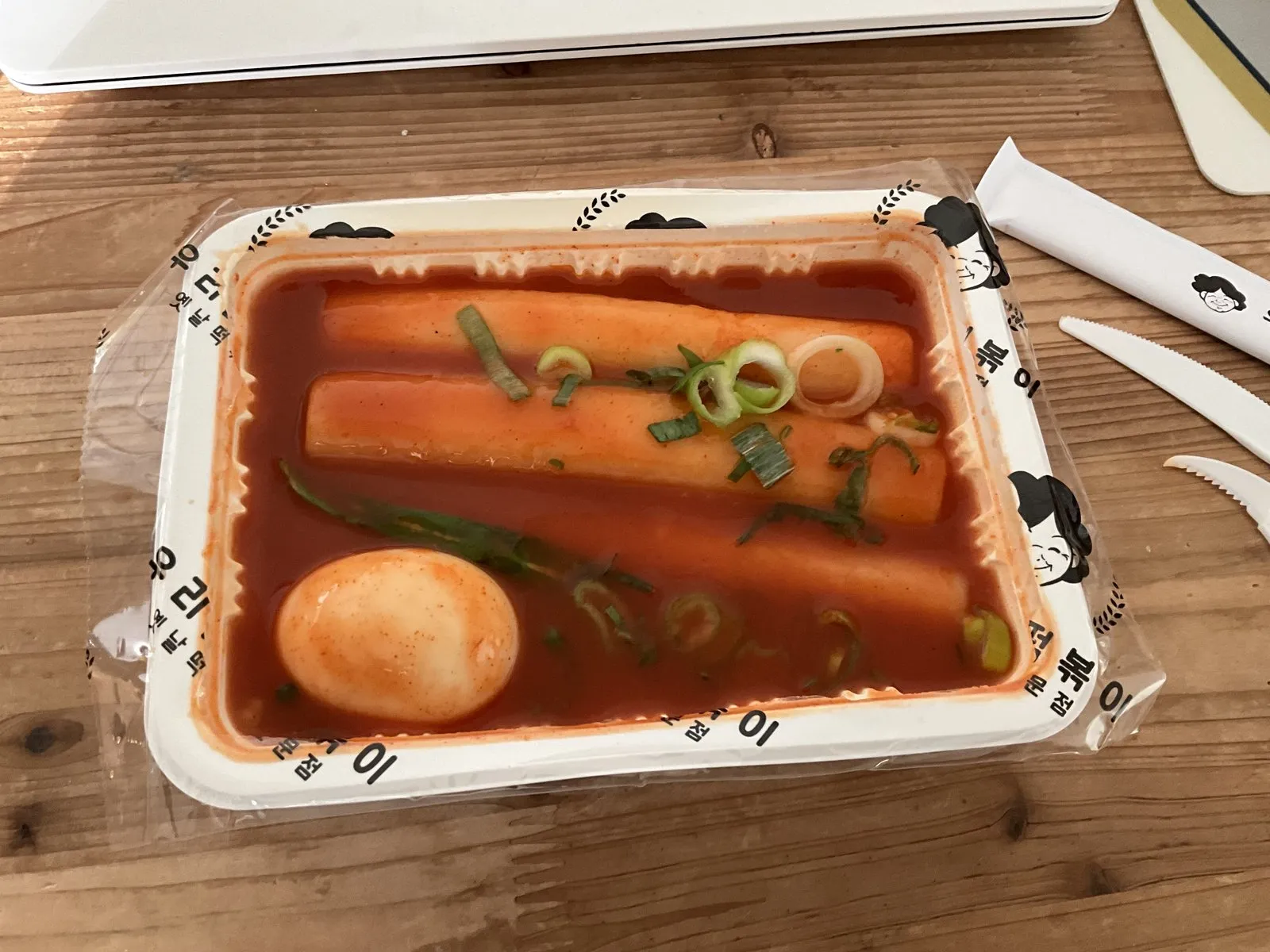
Photo: Kimseoeun2023079825 / Wikimedia Commons (CC0)
Tteokbokki (떡볶이) — chewy rice cakes simmered in a glossy, sweet-and-spicy sauce — is the most iconic of all Korean street foods. If you are a Muslim reader discovering K-food, the natural first question is: can I eat tteokbokki? The honest answer is that the rice cakes themselves are usually fine, but the traditional recipe hides a few ingredients worth a second look. This guide walks through what to check and, more usefully, how to put a halal-friendly version on your own table.
ℹ️ This is a recipe suggestion, not halal certification — verify products via the official logo (BPJPH for Indonesia / JAKIM for Malaysia / MUI) on the packaging.
The base is simpler than you might fear
At its foundation tteokbokki is plant-based. The rice cakes (garaetteok) are made from rice or wheat, water, and salt. The signature paste, gochujang, is built from chili powder, glutinous rice, fermented soybean, and salt. None of that is pork, and none of it is inherently problematic. The questions all come from a small handful of add-ins that street vendors and packaged kits reach for out of habit.
Three things worth checking
1. The broth (anchovy or dashida stock)
Traditional tteokbokki simmers in anchovy-and-kelp stock. Seafood broth itself is broadly accepted in Indonesian and Malaysian halal practice — but the convenient shortcut is a dashida bouillon cube, and those cubes can carry animal-derived (including pork) extract. That is the trap, not the anchovy.
Suggested swap: build a quick vegetable stock from kelp (dasima) plus dried shiitake, simmered 15–20 minutes; or use a kelp-only dashi; or a halal-certified chicken or beef stock.
2. The fish cakes (eomuk / odeng)
The surimi (white-fish paste) at the heart of fish cakes is generally considered acceptable. The risk is what manufacturers add around it: gelatin, animal emulsifiers, frying oil, or cooking wine (mirim). Uncertified fish cakes are therefore uncertain.
Suggested swap: use a halal-certified fish cake, or skip it entirely and reach for tofu skin (yuba), fried tofu pockets (yubu), or pressed tofu. A boiled egg makes a satisfying topping too.
3. Gochujang’s fermentation alcohol
Gochujang is a fermented paste, so trace ethanol forms naturally, and some brands also add ethanol as a preservative. This is the most discussed point. The position published by LPPOM MUI is that ethanol which is not derived from khamr (intoxicant) fermentation can be used in halal food production. In practice that means: choose a gochujang whose source is verified, such as a KMF-certified line (e.g. Chung Jung One / O’Food), or read the label and contact the maker if unsure.
A few smaller things
- Gelatin in any added topping: in Western processed foods it is often pork-derived. Fish gelatin is a non-issue.
- Emulsifiers such as glycerin fatty-acid esters in some rice cakes have an unclear plant-or-animal source — a reason to prefer certified products if you want full certainty.
- Rosé (cream) tteokbokki frequently adds bacon or sausage. Swap those for halal meat, mushrooms, or tofu.
How to make a halal-friendly tteokbokki
A workable home version, scaled to about 10 rice cakes in 800 ml of liquid:
- Stock: simmer a piece of kelp and 2–3 dried shiitake for 15–20 minutes, then remove them. No anchovy, no dashida cube.
- Sauce: stir in roughly 2 Tbsp certified gochujang, 1.5 Tbsp chili flakes, 3 Tbsp sugar (or honey), and 2 Tbsp soy sauce.
- Add-ins: rice cakes plus tofu skin instead of fish cake, a little cabbage and scallion, and a boiled egg on top.
- Simmer until the sauce thickens and glazes the rice cakes.
For Indonesian and Southeast Asian palates, the manis pedas (sweet-and-spicy) balance works beautifully: nudge the sweetness up and the heat down, or make the creamy rosé version, which is one of the most popular adaptations in the region.
Verify before you buy
Certified options already exist — you do not have to cook from scratch:
- Yopokki cup tteokbokki carries MUI certification on several of its flavors.
- Addal carries Malaysia’s JAKIM certification on its retail rice-cake products.
- Mujigae was the first MUI-certified Korean restaurant in Indonesia.
The single rule that ties this together: certification is product-specific. A brand having one certified item does not certify everything it sells. Always look for the physical halal logo on the exact package in your hand.
Frequently asked questions
Are the rice cakes themselves halal? They are usually just rice or wheat, water, and salt. The only caveat is an occasional emulsifier of unclear source, so reach for a certified product if you want to be certain.
Is gochujang halal? Its ingredients are plant-based; the open question is fermentation-derived or added ethanol. Choosing a certified gochujang, or verifying the label, resolves it.
Is instant Yopokki halal? Several Yopokki cups carry MUI certification — confirm the logo on the specific cup you buy rather than assuming the whole brand is covered.
What is the single easiest swap? Drop the anchovy/dashida stock and the fish cake. A kelp-shiitake stock plus tofu skin, with a certified gochujang, gets you most of the way to a halal-friendly bowl.